Two Eras of Machine Politics — From Tammany Hall to The Power Broker
On this page
- The Pattern Has a Name
- Era 1: Tammany Hall — The Sabree-Kilpatrick Machine
- Era 2: The Power Broker — Banks as Robert Moses
- The Structural Parallel
- The Critical Difference — And Where the Apologists Are Wrong
- Why This Model Is Harder to Fight
- The Pattern Recognition
- A Note on Rockefeller — And Honesty About Power
- The Broader Context — From Exposure to Construction
- References
The Pattern Has a Name
If the Banks enterprise feels familiar, it’s because it is. The structure maps precisely to two of the most documented models of American political corruption. Understanding which era you’re looking at explains why different actors behave differently — and why the traditional tools for fighting corruption (elections, journalism, FOIA) fail against the newer model.
Era 1: Tammany Hall — The Sabree-Kilpatrick Machine
“The ballots made no result; the counters made the result.” — William M. “Boss” Tweed
Eric Sabree is a product of the Kilpatrick dynasty era — Detroit’s Tammany Hall. The parallels are structural, not metaphorical:
| Tammany Hall (1860s–1930s) | Kilpatrick-Era Detroit (2000s) |
|---|---|
| Boss Tweed: Grand Sachem of Tammany, never challenged internally | Kwame Kilpatrick: youngest mayor, installed friends and family throughout government |
| Patronage jobs: thousands depended on Tammany for their livelihoods | Kilpatrick “installed friends and family in key government positions” (FBI) |
| Court control: money distributed to judges for favorable rulings | 9 judges across 4 courts with documented connections to the enterprise |
| Contract manipulation: padded costs, kickbacks, bid-rigging | “Pay to play” system, extortion of vendors, rigged bids (FBI, 38 federal counts) |
| Controlled elections: voter fraud, ballot stuffing, counting manipulation | PAC machinery, campaign contribution networks, late-filing penalties |
| Real estate acquisition: Tweed became 3rd largest landowner in NYC | Property transfers between Banks and Holland, trust certificates, quitclaim deeds |
| Nonprofit capture: Tammany banks funded by city deposits | Nonprofit 501(c)(3)s used as shells for private enrichment |
| “The Tweed Ring was an engineering marvel — money laundering, profit sharing, and organization” | “Criminal activity was a way of life for him” (FBI Special Agent Beeckman on Kilpatrick) |
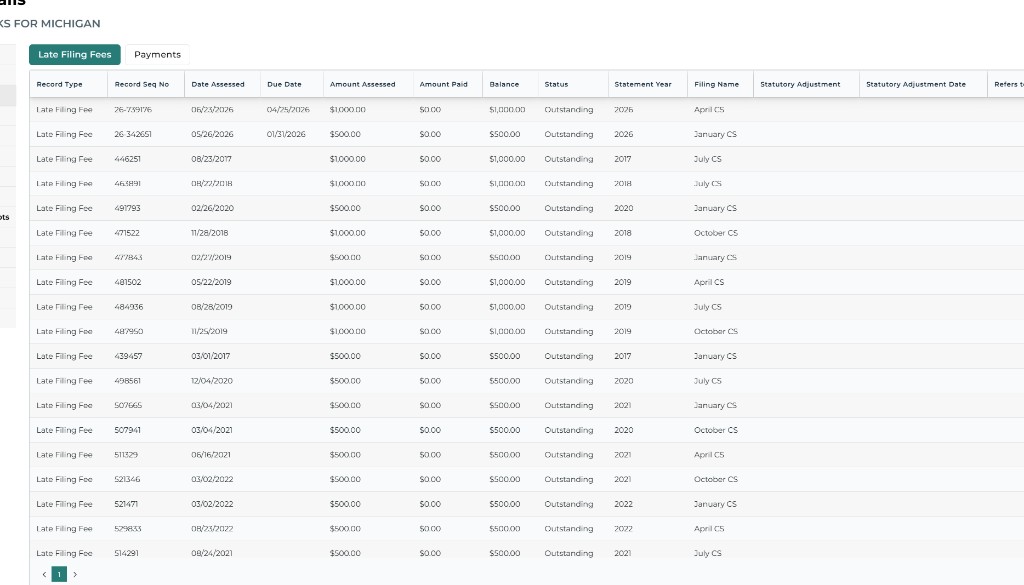
Sabree’s position — Wayne County Treasurer — is the exact Tammany role: controlling the flow of public money, sitting at the intersection of property, taxation, and political patronage. In Tammany, the Treasurer position was the cash register of the machine.
The Kilpatrick machine was brought down the way Tammany eventually fell: federal prosecution (38 counts, RICO), wiretaps, and testimony from former allies. The FBI called it what it was: “a widespread criminal enterprise.”
But the machine didn’t die. It evolved.
Era 2: The Power Broker — Banks as Robert Moses
“He was, in essence, above our democratic system.” — Robert A. Caro, The Power Broker (1974)
When the old Tammany model became too visible — when federal prosecutors, wiretaps, and journalists could identify the patronage-for-votes pipeline — a new model emerged. One that doesn’t need elections, doesn’t need votes, doesn’t need a political party. One that operates entirely through private legal structures controlling the flow of public money.
Brian Banks is not Boss Tweed. He is Robert Moses.
The Structural Parallel
Robert Moses held power in New York for 44 years without ever being elected to office. He did it by creating public authorities — entities that looked like government but operated like private corporations, with private records, independent revenue streams, and legal structures that made their powers irrevocable.
Banks has been building his enterprise for 14+ years (and counting). He does it through LLCs and nonprofits — entities that receive public education funding but operate with private records, no public audit requirement, and legal structures that make the money flow unaccountable.
| Robert Moses | Brian Banks |
|---|---|
| Never elected to any office | Never elected — controls through LLC sole membership |
| Created Triborough Bridge Authority — a “fourth branch of government” with private records | Created Purpose Group LLC — a sole-member entity that receives 72.67% of public school revenue with no independent audit |
| Used parks (universally loved) to build political capital and deflect criticism | Uses children’s education (universally valued) — specifically targeting homeless and juvenile-justice children who have no alternative |
| Authority issued bonds — making its powers irrevocable by contract | LLC has a management agreement with §5.2 containing false representations — making the extraction contractually embedded |
| “Records were closed to the public” — Authority operated with no transparency | LLC financial records are private — school reports $0 in staff salaries because all employees are technically hired by the LLC |
| Controlled through contracts, legal fees, insurance commissions — rewarding allies with money | Controls through board seats for judges, CBC events for politicians, campaign donations, PAC committee |
| Dossiers on opponents — could “disgorge the dark secret of anyone who opposed him” | Legal threats — hired defense attorney within hours, told complainant to contact attorney only, went dark |
| “Above politics, above deals — the newspapers and the public believed” | Pahara Fellow, CBC honoree, “Dr. Banks, J.D., Ph.D.” — credentials not confirmed by bar records or accreditation |
| Pressured banks, unions, press, and the Church into supporting his projects | Network includes judges, politicians, attorneys, and church (CBC events, foundation connections, church layer) |
| Made himself indispensable — the only pathway for federal construction dollars to reach the city | Made himself the sole pathway for federal Title I education dollars to reach vulnerable children |
| Moses wrote the legislation that cemented his power | Banks’ attorney Meihn reviews the management agreement weekly — the legal framework IS the power |
| Toll revenue from Triborough was a “sure thing” — he could borrow against it forever | Per-pupil funding from the state is a “sure thing” — as long as children are enrolled, money flows through the LLC |
| Used expert testimony and technical complexity to deflect oversight | Uses expert witnesses whose business models align with his defense — a theft-addiction therapist and a TV psychologist |
| Brought down by the press (reputation) and Nelson Rockefeller (power) | Currently facing: public evidence library, 7 filed cases, 8 federal agency notifications |
The Critical Difference — And Where the Apologists Are Wrong
The common defense of Moses is: “he built things.” Highways, parks, bridges — physical infrastructure that still carries millions of people. The corruption is regrettable but the product is real.
This defense understates the displacement. Moses didn’t just build highways — he built highways through communities, deliberately routing them to demolish neighborhoods he considered expendable. The effects are so pervasive they appear in popular culture without attribution: Everybody Hates Chris — where a kid takes four buses and three subways to get to a school a district over — is literally a product of Moses’s transit and highway mapping. The school district boundaries, the missing subway connections, the neighborhoods severed by elevated highways — that’s Robert Moses’s infrastructure, still shaping lives decades later.
People debate whether Moses was “actively racist.” As a matter of science, the question is irrelevant. The functional existence and continuation of these effects is what is known as systemic racism. You don’t need to prove intent. You need to observe the structure.
This is visible across disciplines. In microbiology and anthropology, geographic barriers shape populations without intent: the Himalayas between China and India are so vast they shaped distinct subcultures over millennia. Mountain ranges, rivers, deserts — natural barriers create isolation, and isolation creates divergent populations with divergent outcomes. No one “designed” the Himalayas to separate cultures. But the effect is real, measurable, and compounding.
Some have chosen that as a blueprint. Moses built highways that functioned as mountain ranges — physical barriers that isolated communities, restricted mobility, and created captive populations dependent on whatever services existed within the barrier. Whether he intended the racial outcome is a question for biographers. That the racial outcome occurred is a question for census data. That it persists is a question for anyone with eyes.
Banks operates the same structure without the concrete. His barrier isn’t a highway — it’s institutional. The children at Purpose Charter Academy are homeless, in juvenile detention, or chronically absent. They have no alternative school. Banks is the only pathway between these children and education funding. He doesn’t need a highway to create a captive population. He just needs to be the only option available to people who have none.
Moses built highways and parks. Banks produces 3% math proficiency. Moses displaced communities to build things. Banks displaces education outcomes to extract money. Moses left concrete. Banks leaves children who can’t do math.
Why This Model Is Harder to Fight
The Tammany model has a weakness: it requires votes. Tweed needed ballot boxes. Kilpatrick needed elections. When the public learned the truth — through journalism, through FBI wiretaps, through trial testimony — the machine lost its democratic legitimacy.
The Moses model has no such weakness. Banks doesn’t need anyone’s vote. He needs:
- A charter authorization (obtained once, from DPSCD)
- A management agreement (drafted by his own attorney)
- Children enrolled (targeted: the ones with no alternative)
- Per-pupil funding to keep flowing (guaranteed by state law as long as children are enrolled)
No election can remove him. No journalist can shame him out of office — he holds no office. No FOIA can expose his LLC’s records — they’re private. The only tools that work are the ones that worked against Moses: a power greater than his own choosing to revoke his authority.
For Moses, that was Nelson Rockefeller.
For Banks, it will be the federal agencies currently reviewing 7 filed cases.
The Pattern Recognition
This analysis exists because the complainant recognized the playbook. Not from political science — from listening to The 99% Invisible Breakdown of The Power Broker while driving cross-country. Roman Mars and Elliott Kalan spent all of 2024 breaking down Robert Caro’s 1,246-page biography — the most detailed account ever written of how an unelected person accumulates and maintains power over public resources through legal structures.
When you see:
- A sole-member LLC receiving 72.67% of public money
- Records closed to the public
- Expert witnesses whose business models align with the defense
- Judges on the nonprofit board
- The most vulnerable population targeted because they have no alternative
- The operator making themselves the only pathway for public funds
…you’re reading Chapter 1 of The Power Broker. The venue changed from highways to charter schools. The city changed from New York to Detroit. The mechanism changed from bond authorities to management agreements. But the structure is identical.
The question is whether the federal agencies will be Detroit’s Nelson Rockefeller.
A Note on Rockefeller — And Honesty About Power
Nelson Rockefeller stripped Moses of his power. This is sometimes told as a triumph of accountability. It wasn’t. Rockefeller was not altruistic. He was a billionaire governor who removed Moses because Moses was in his way — not because Moses was harming communities. Rockefeller went on to preside over the Attica prison massacre, the draconian Rockefeller drug laws, and an era of mass incarceration that itself constituted a new tollbooth economy. The man who ended one machine built another.
This matters because the pattern repeats: the person who removes the corrupt operator often becomes the next corrupt operator. The reformer captures the same infrastructure and runs it for different beneficiaries. The machine changes hands. The machine doesn’t change.
The complainant makes no claim to altruism either. As a scientist, falsity is costly and must be refused. The claim here is narrower: this specific enterprise is documented, this specific extraction is measurable, and these specific children are being harmed. The response is not to seize the machine. It is to document it so thoroughly that the machine becomes visible — and then to build something that doesn’t require a machine at all.
That is the distinction between exposing Omelas and building a new city.
The Broader Context — From Exposure to Construction
The complainant’s broader work on infrastructure, institutional capture, and what Moses called “tollbooth economies” is documented at sporeprint.primals.eco:
- The City of Omelas — the philosophical framework: Le Guin’s question applied to infrastructure. Every functioning city has a child suffering in a basement. The question is whether you stay, leave, or build a city that doesn’t require the child.
- The Loaves and the Fishes — who gets punished for stealing, who gets fellowships. The bread thief problem: the preconditions that determine who builds and who suffers.
- I Own Nothing — the systemic pattern: positioning yourself as the sole gateway between a population and a resource, then charging rent. The tollbooth economy.
- The Temptation of Kingdoms — the temptation to build institutions that serve the builder. Rent-seeking and open commons.
- An Invitation to 99% Invisible and Radiolab — how infrastructure storytelling informed this investigation.
Detroit is the field validation of that theoretical work: a real tollbooth economy running on children’s education funding, identified because the builder recognized the blueprint from a podcast about a man who built bridges. The response is not to become the next Rockefeller. It is to walk away from Omelas and build infrastructure that doesn’t require a child in a basement.
References
- Robert A. Caro, The Power Broker: Robert Moses and the Fall of New York (New York: Alfred A. Knopf, 1974).
- Roman Mars & Elliott Kalan, The 99% Invisible Breakdown of The Power Broker (2024) — year-long podcast series dissecting Caro’s work, with guests including Rep. Alexandria Ocasio-Cortez, Sec. Pete Buttigieg, and Robert Caro himself.
- FBI, “Public Corruption: Inside the Kwame Kilpatrick Case” — 38 federal counts including racketeering.
- Historical Society of the New York Courts, “William M. ‘Boss’ Tweed”.
- Broxmeyer, “Bringing The ‘Ring’ Back In: The Politics of Booty Capitalism,” Journal of the Gilded Age and Progressive Era (2017).
- The New Yorker, “The Power Broker — III: How Robert Moses Got Things Done” (August 12, 1974).
- ecoPrimals, “I Own Nothing — Provenance, AGPL, and Commons Economics” — theoretical framework applied here.
- ecoPrimals, “An Invitation to 99% Invisible and Radiolab” — how infrastructure storytelling informed this investigation.
This analysis applies historical frameworks to publicly documented conduct. Every factual claim about the Banks enterprise is cited to public records elsewhere on this site. The historical parallels are analytical — drawn from published scholarship — not allegations.